
https://pixelkin.org/2014/09/16/we-arent-losing-a-generation-of-boys-to-games-2/
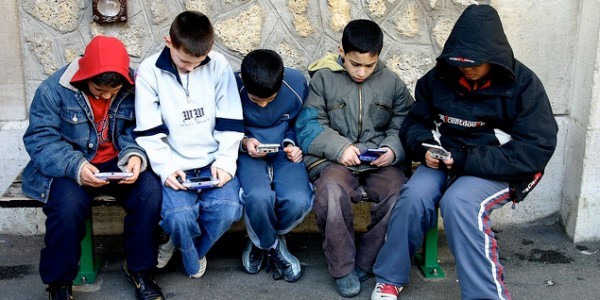
Boys are gaming more than girls. It might be one of the reasons why their reading scores are lower. This is an hypothesis of Monique Volman, Professor of Educational Sciences at the University of Amsterdam. She participates in a research project that tries to integrate game aspects into education, which allow gamers to actively influence the course of events.
The weak scores of boys have lead to a vicious circle, according to Volman. The idea the boys are doing less well has reduced teachers’ expectations, and boys perform less as a result.
The Dutch Education Council, an independent governmental advisory body, which advises the Minister of Education, Parliament and local authorities, will come later this year with propositions how to deal with the different scores of boys and girls. According to Edith Hooge, the Chair of the Council, a key is to increase the pleasure of reading by offering more texts that are interesting for boys – thrillers, books on sports, books on boys with which they can identify.
The Education Council’s advice will build on the “reading offensive” that Hooge started last year together with the Council for Culture, another governmental advisory body: “Deep reading intensifies concentration, trains the memory, helps to make connections, and stimulates imagination”. It is key for everything: to be able to learn well at school and to fully function in society. It even helps to become good in technical subjects.
Monique Volman points out that not only boys spend less time on reading. The whole culture has changed. (NRC, 1 & 2 February 2020)
Already in her inaugural address, she pointed out that “achieving .. richer and more ambitious learning goals requires new ways of motivating students. Schools can make the meaning of learning clear to students by linking subject matter to questions and problems that have interest and relevance to them. Schools must also let students have the experience of acting and making a difference. They should be able to experience how their knowledge and skills contributes to solutions for social and technical problems, and to pleasure, beauty and the social good.” This will require more than stressing deep reading.
 triplelll.nl