
https://en.unesco.org/news/startling-digital-divides-distance-learning-emerge
“In contrast to the global financial and economic crisis of 2008/09, the corona crisis could lead to a long-term reduction and increasing inequality in participation in further training.” That is the sober conclusion that a research group at the Wissenschaftszentrum Berlin published in the WZB Mitteilungen of June 2020. The pandemic has created many obstacles for continued education.
While many could not avoid learning how to work from home, how to organize home schooling, and how to digest an overload of information on contagious diseases, participation in professional training programmes has been under pressure. On the job training, too, was more limited, because more work was done from home.
Given the enormous uncertainty about the future, most companies became very reluctant to send their employees to training programmes or to organise such programmes themselves (with a few exceptions for IT programmes). All institutions that offer courses suffered from the fact that face-to-face programmes were hardly possible. So there was less on offer (beside online courses).
Yes, there was a sudden increase of online courses. But people had less time to participate. Working from home and spending already a large part of their day behind the screen, many people became tired to spend even more time at the computer. Furthermore, the computer was often occupied by children, either to follow their school programme, or for entertainment and keeping contact with friends. Or there were no computers at all.
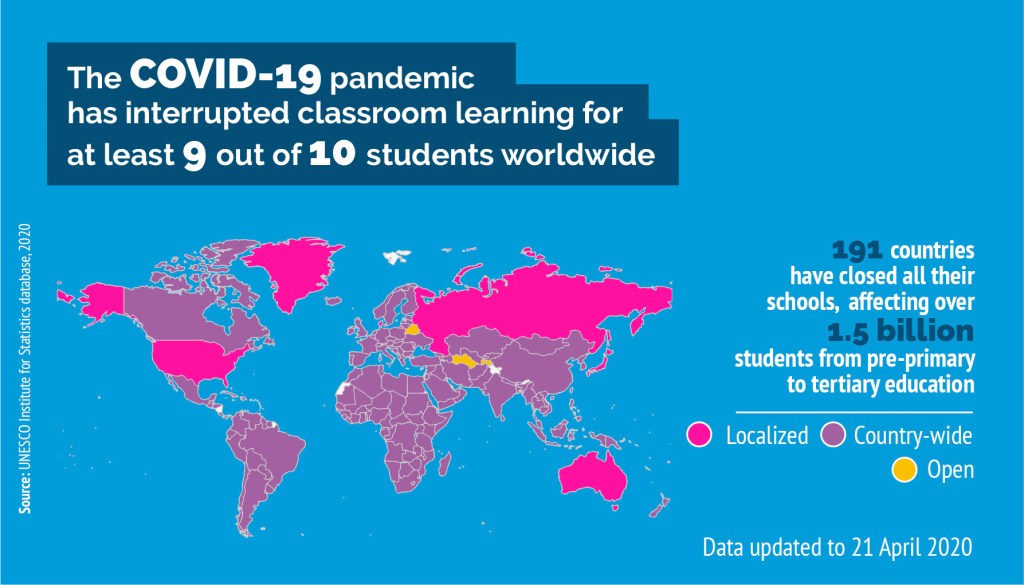
The fact that many schools have been closed put additional stress on parents who had to split their time between childcare and their own professional work, which they had to do in an environment which was by far more distracting than an office cubicle. Since physical contact with elderly persons was not advisable, grandparents could not take over more of the childcare.
The authors come with a number of recommendations to improve this situation:
– Government could support companies in their efforts to keep employees and use the time of reduced production for future oriented training programmes that would allow the companies to adapt to new circumstances.
– Companies should assist their employees in selecting relevant training programmes that would increase their future employability.
– Government could subsidize the creation of relevant online courses which would help employees to prepare for the future demand of the labour market.
 triplelll.nl